Troubleshooting
Rats!
One of the most common things that puts people off starting to compost is the thought of it attracting rodents.
Compost bins are often blamed for attracting vermin, when in fact the rats are already happily living in gardens and allotments. There may be other things that are happening in your area that could be attracting rats – for example, garden decking is known to create a perfect home for rats to nest, or if there is lots of rubbish for them to hide in or find food.
There are some things we can do to prevent these local rats seeing our bins as a cosy restaurant:
- Location. Rats prefer to stay under cover, so ideally place bins away from fences or buildings. Being able to clearly see around the whole base of the bin is useful for checking if there has been any disturbance.
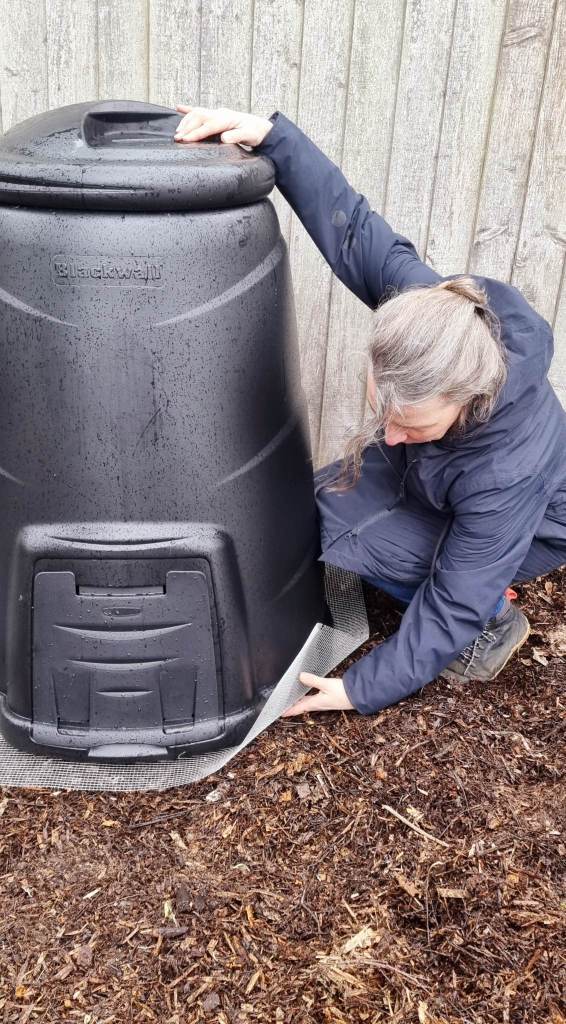
- Place your bin squarely onto slabs, or line the base and hatch with wire mesh to stop rats tunnelling up underneath. 6mm galvanised mesh is ideal. Some people use chicken wire, but be warned: rats can chew through it, so use a double or triple layer.
- Avoid composting meat and cooked food unless your bins are fully rat-proofed. (Look up our information on bokashi for safe composting of meat and cooked food.)
- Rat-a-tat-tat. Disturbing the bins regularly by giving the outside a whack with a stick, or stirring the contents, makes it less appealing to rats looking for a place to settle down.
General good practice, such as keeping areas around bins tidy and free from food scraps, and the composting materials moist, all help too.
How to rat-proof a dalek
You will need:
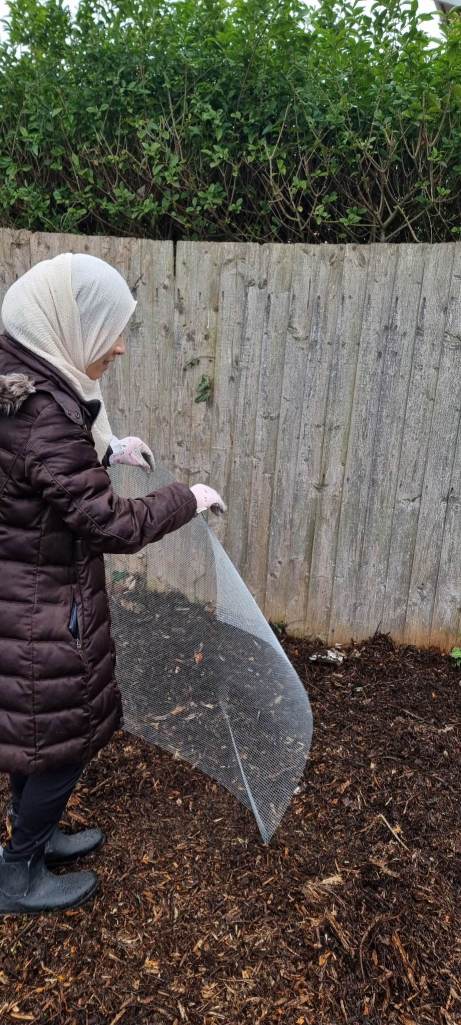
- two pieces of rat-proof mesh. One to go under your dalek, and one to cover the hatch
- Some pieces of wire or releasable cable ties
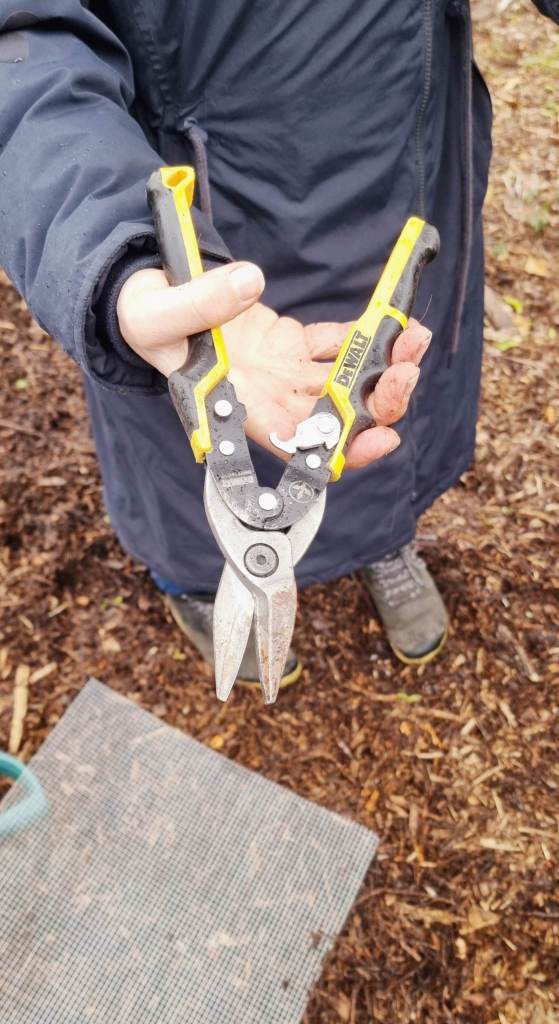
- a pair of aviation snips
- Sturdy gloves – the cut edges of the mesh can scratch your hands
Instructions:
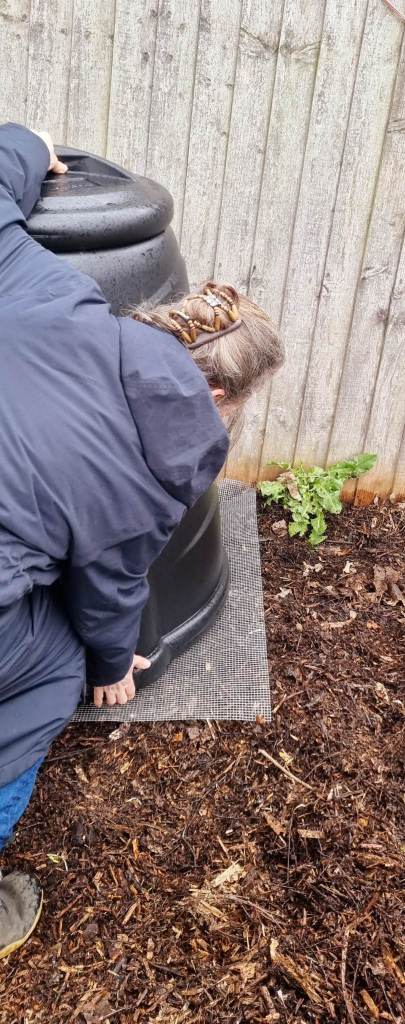
- Sit your dalek on a big square of the rat-proof mesh,
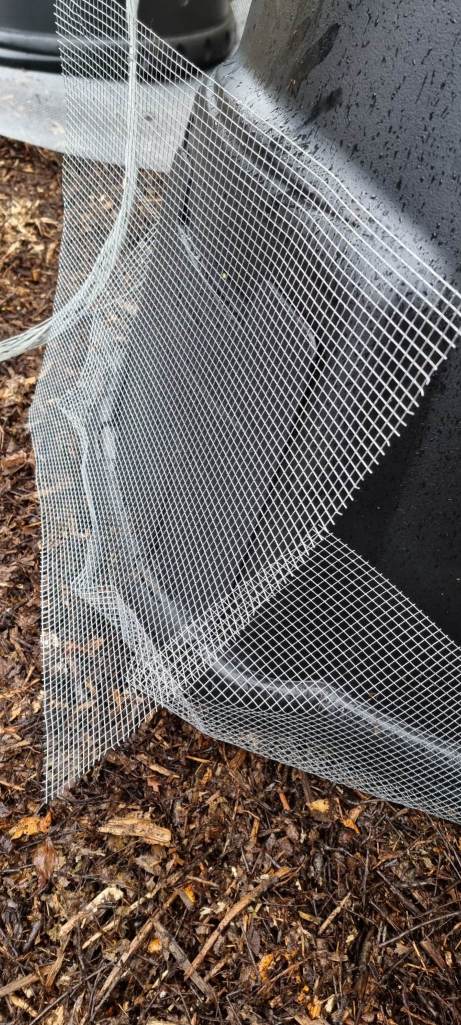
- Bend and fold the edges of the mesh up around the base of the bin
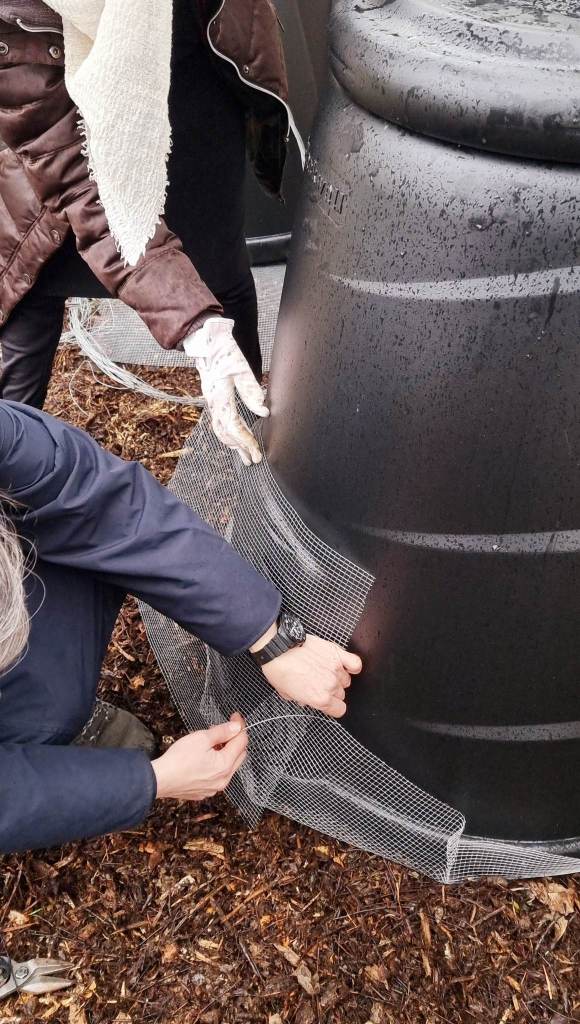
- Secure the mesh by attaching cable ties or wire over some of the folds
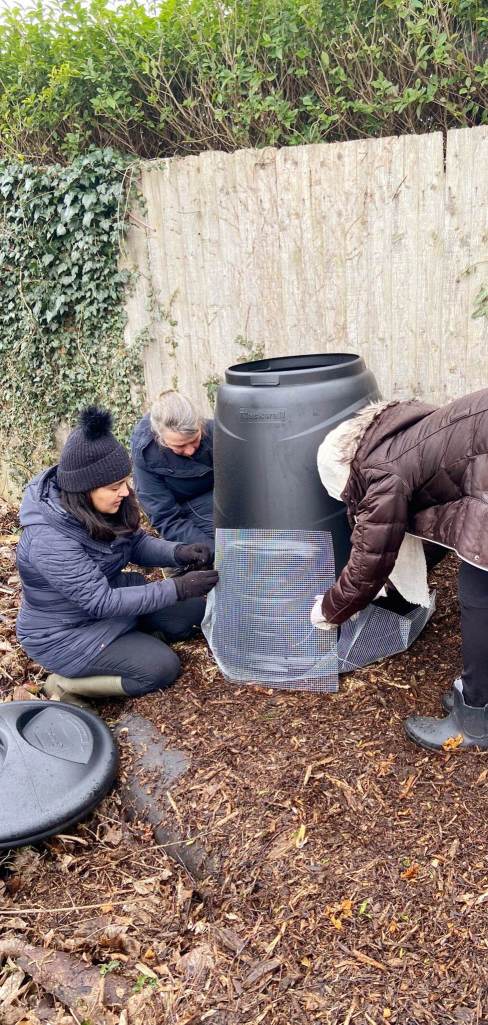
- Attach the second piece of mesh to the base square, and fold it up over the hatch
- Secure the mesh over the hatch by running wire or cable ties from near the top of the hatch diagonally down to the base corners where they stick up.
View this slideshow for more information
Bad smells
Finished compost smells beautifully earthy, like a forest floor. It is a myth that the composting is a smelly process. However, you may have experienced a slimy, wet, smelly compost bin before learning that you need to add plenty of ‘browns’ into the mix.
If you find you have a smelly compost bin, this is a sign it needs more oxygen and carbon, which is very easy to fix. Just add in plenty of whatever browns you have to hand – shredded paper, ripped up brown card, woodchips, Autumn leaves – and give it a really good stir, breaking up clumps of material. It is sometimes easier to pull out the whole contents of the bin into a wheelbarrow or onto a tarp, and to mix the ingredients all the way through. You will find that within a week or so everything is smelling much better!
Fruit flies
These pesky little flies are completely harmless, but can be annoying when opening your compost bin. They are part of the natural process, and will help to break down materials, but there are a few tricks for keeping numbers under control.
- Use a container with a tight-fitting lid to collect the food scraps in your kitchen. Add toilet rolls, torn up egg boxes etc to this tub to help soak up juices.
- When adding fresh scraps to your compost bin, mix them with brown materials, and cover with extra browns to prevent the flies from getting to them.
- If you do end up with a lot of fruit flies, try leaving the lid off your bin for a few hours. This will let many of them out, but also let birds and beetles get numbers under control – they provide a helpful snack for garden wildlife!
Compost taking too long to break down
This usually happens because your compost pile has dried out. Dig around in your compost pile and look at a few handfuls of compost. Squeeze them to see if they will clump together in your hand, or just fall apart. If it falls apart, and feels quite dry to the touch, it needs more moisture.
You can do two things:
- Water it. Pull all your materials out of your pile and make sure all of it gets wet.
- Add more moist greens, such as food scraps or grass clippings. Chop if needed, and mix in well.
 The Compost Connection